

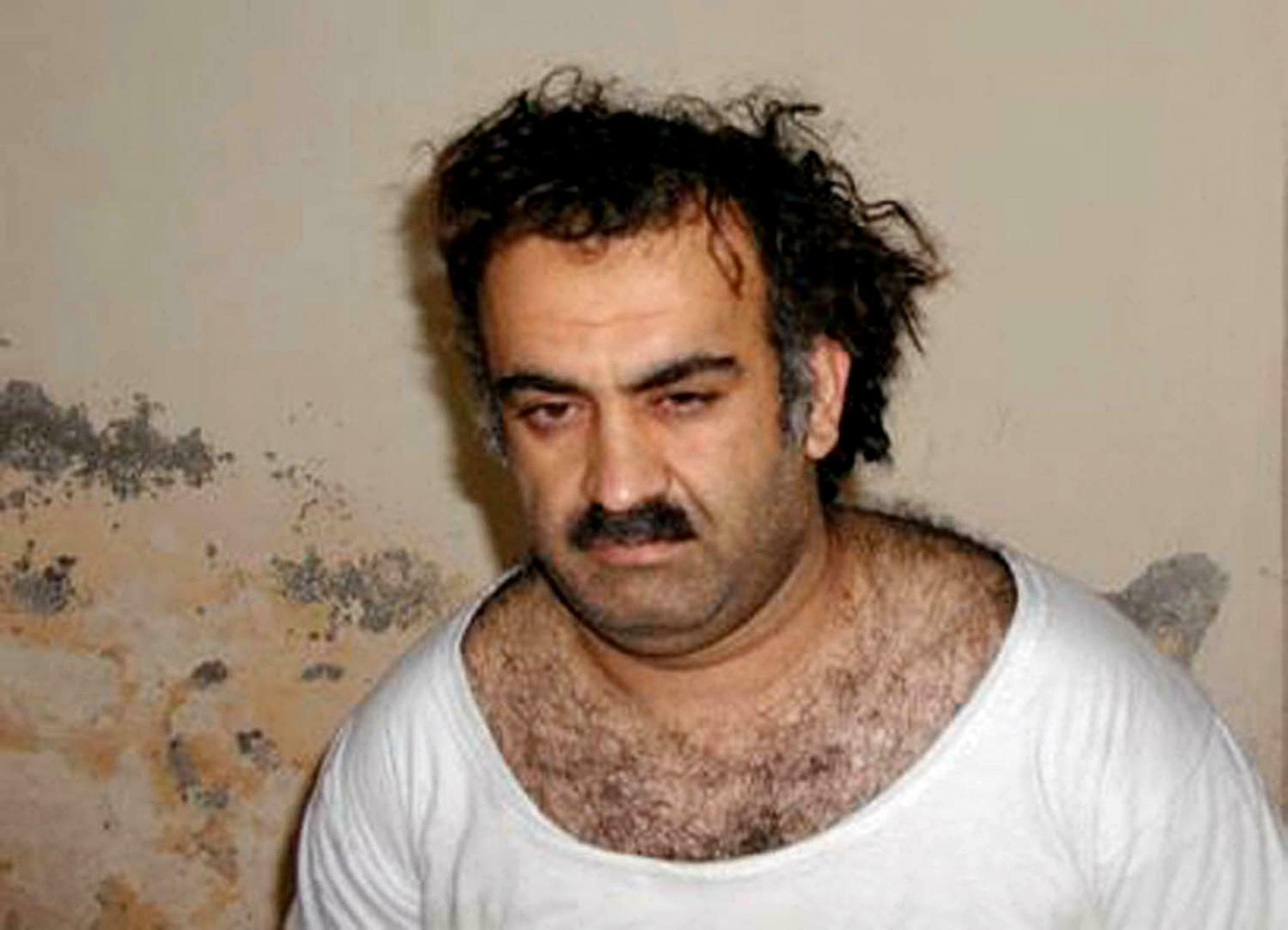


Khalid Mohammed Confessed To Being The 9/11 Mastermind 20 Years Later, He’s Still Awaiting Trial
Agency report
For the past 20 years, I have been chasing a ghost – the man who single-handedly masterminded the attacks on New York and Washington and launched an American war against terrorism that continues to this day.
His name is Khalid Sheikh Mohammed, and he is the U.S.-educated Pakistani engineer who, as the operational commander of al-Qaida, also orchestrated dozens of other terrorist plots and attacks against Americans and other innocents around the world.
Yet since his capture in 2003, Mohammed has been kept hidden away by a U.S. government that claims to want to bring him to justice but never has. As a result, what he did – and, importantly, why he did it – remains largely unknown to the public except for some broad-brush details.
Now, Mohammed – or KSM as he is commonly known – stands at the epicenter of the most vexing questions and conflicts that have arisen during our modern age of terror that began on that blue-sky September morning.
Chief among them: Can someone who the U.S. government has admittedly tortured ever be fairly tried, convicted and sentenced to death for crimes he admitted under duress?
Can the most consequential act of terrorism known to mankind be prosecutable under U.S. laws that have existed since our nation’s inception? Or were the 9/11 attacks so monstrously transcendent of societal norms that their perpetrators can simply be secreted away without ever having the opportunity to contest the accusations against them?
Will the United States, a nation that prides itself on its foundations of democracy and the rule of law, ever bring Mohammed to justice? And what does it say about America that it can’t lay out its case publicly for the world – and the survivors of the nearly 3,000 victims – to see?
At the end of the second World War, a U.S.-led coalition charged, prosecuted, convicted and executed the top leadership of Nazi Germany within two years of the cessation of hostilities. At the outset of the Nuremberg trials, chief U.S. prosecutor Robert Jackson gave a soaring oration about the grave responsibility of devising and conducting the first trial in history for “crimes against the peace of the world”:
The military tribunals that followed, according to most observers, produced a fair, transparent and just result – and a vast body of publicly available evidence for the annals of history.
I have thought often of Nuremberg and Jackson’s remarks since early 2002, when I first began trying to anticipate what the U.S. government would do with 9/11 suspects.
Since then, I have pursued Mohammed to nearly every continent on the globe and, ultimately, to the U.S. Naval Base at Guantanamo Bay where he still awaits trial for the deaths of nearly 3,000 people.
A GHOST EMERGES IN PAKISTAN
Six months after the 9/11 attacks, an FBI agent told me a shocking – and highly-classified – secret in a pub just blocks from the still-smoldering World Trade Center wreckage.
At the time, the entire might of the U.S. military and intelligence machine was focused on finding Osama bin Laden, the al-Qaida leader whose claim of responsibility had made him the public face of the worst terrorist attacks of the modern era.
But the agent, attending a retirement party for one of his international terrorism squad colleagues, confided that the FBI had learned about someone else who might be far more personally responsible than bin Laden for virtually every aspect of the attacks. And agents believed the man was orchestrating potentially many other operations around the globe, some of them imminent.
After much pleading on my part, the agent looked this way and that to make sure his colleagues weren’t listening, bent toward me and murmured the man’s name: Khalid Sheikh Mohammed.
Within hours, I was calling sources at the highest levels of the U.S. government, including a senior White House national security official. He insisted – falsely, it turns out – that he’d never heard of a man by that name, or anyone else with a central role in the attacks.