

Closing Gender Finance Gap Can Unlock $6trn Economic Opportunity- Expert
The Chief Executive Officer of 2xGlobal, Jessica Espinosa, has disclosed that closing the gender finance gap will help unlock $6tn economic opportunity globally.
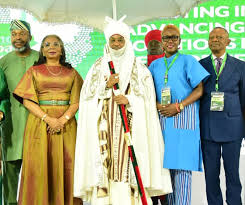
She stated this in her keynote address at the third Gender Impact Investment Summit and the launch of the Gender Equity and Social Inclusion Roadmap 2025–203 in Lagos on Thursday.
Impact Investors Foundation, which hosted the summit, which had the theme, “Investing in Equity: Advancing Gender-Led Solutions for Inclusive Development,” aims to raise $8bn in inclusive capital in 10 years.
According to Espinosa, backing women as entrepreneurs as owners and leaders consistently boosts financial performance.
“And if we think about that gap and those big numbers, it really speaks to the opportunity. It’s a huge market opportunity that we see. And so together, these figures really reveal a powerful truth. Closing the gender finance gap represents a $6tn economic opportunity waiting to be unlocked.
“From low GDP gains to Nigeria’s untapped MSME potential, investing in women is the fastest route to inclusive and scalable growth. Investing in women is a market advantage, and here’s why.
“Backing women as entrepreneurs, as owners and leaders consistently boosts financial performance. Closing the gender gap in the workforce could unlock trillions in global GDP. Supporting women as suppliers and supply chain workers strengthens risk resilience and aligns with global environmental, social and governance standards,” she enunciated.
According to the International Labour Organisation, women-led Micro, Small, and Medium Enterprises comprise a significant portion of Nigeria’s business landscape, with estimates ranging from 32.9 per cent to 40 per cent of MSME ownership.
In the same vein, the Emir of Kano, His Highness Khalifa Muhammad Sanusi II, CON, advocated inclusion by the financial sector through the disbursement of loans to women-led businesses and physical challenges.
He emphasised the importance of reserving some elective positions for women, lamenting that there are only four women senators among the 109 members of the National Assembly.
“We have a constitution that says you must have a minister from every state. Why is diversity in Nigeria only a matter of states? Why can’t the constitution say you must have 30 per cent of your cabinet as women or 40 per cent? Why is diversity only geographical? These are political questions. And we need to push this.
“We have a Senate of 109 people. How many female senators do we have? Four out of 109. How do you push through laws that are positive for women? We’ve got to push for these things. We have three senatorial districts in every state. Why can’t we say at least one district must be contested by women only? And you can rotate that. Every eight years, you rotate,” he argued.
Also, the Chairman of the Impact Investors Foundation, Frank Aigbogun, highlighted that the launch of the Gender Equity and Social Inclusion Roadmap, which was developed in collaboration with PwC Nigeria, would engineer a seismic shift in our nation’s economic and social landscape in addressing inclusion.
“The targets we have set underscore the urgency of this challenge and the scale of our ambition. We aim to mobilise $8bn in cumulative gender-inclusive capital, with $1.5bn coming directly from domestic capital pools, to achieve 90 per cent integration of GESI principles among general partners.
“This framework is our commitment to ensure that capital is not exclusive, but indeed, truly inclusive. To drive this momentum forward and to ensure that these targets are met, we are simultaneously launching the Nigeria Inclusive Capital Commitment 2035 campaign,” he explained.
The Chair, GSG Nigeria Partner and Vice Chair, GSG Impact, Ibukun Awosika, added that when a nation responsibly creates opportunities and facilitates the empowerment or the enablement of its women and disabled people to be major contributors to the economy, it creates an equitable society that allows them to compete.
“We only gain when we use the best of our people, male or female, and when we create an equitable society for all of our citizens to give the best of what they have, without anyone being subject to a stereotype or a mindset that says to them, you can’t,” the former FirstBank chairperson noted.
The summit focused on Nigeria, where women-led Micro, Small, and Medium Enterprises account for an estimated 32.9% to 40% of all MSME ownership.