

Rivers Vows To End Female Genital Mutilation
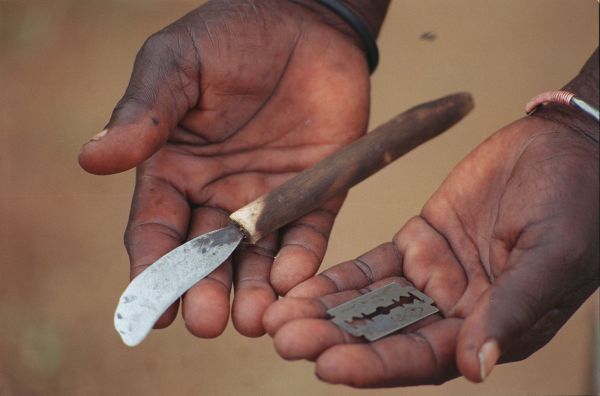
The Rivers State government has renewed its commitment to end Female Genital Mutilation, expressing sadness that the harmful practice still happens in some communities.
The Permanent Secretary, Ministry of Social Welfare and Rehabilitation, Mrs Lauretta Davies-Dimkpa, stated this on Wednesday, during the grand opening of the Rivers State Sexual Assault and Referral Centre to mark the International Day to End Female Genital Mutilation in Port Harcourt.
Davies-Dimkpa said the governor, Siminalayi Fubara-led administration is taking deliberate steps to eliminate the harmful practices.
“The Ministry of Social Welfare and Rehabilitation has taken it upon itself to bring an end to Female Genital Mutilation and every three months we go in there to speak to survivors and train facilitators.
“Just last week, we went to the four communities where we have the most prevalence of this practice-Ahoada West, Ahoada East, Abua-Odual Emuoha local government areas, where we have Female Genital Mutilation still practised today in 2026.
“And we have people in these communities come out to tell us how it is inappropriate to even talk against it in those communities,” the Permanent Secretary stated.
Also speaking, the Coordinator, South-South Sexual and Gender Based Violence Prevention and Information Hub in Nigeria, Inyingi Irimagha, called for better funding to address sexual and gender based violence.
Irimagha also called for the equipping of the Sexual Assault Referral Centres in the state with necessary services, including legal units, to make it more efficient.
She stated, “We want the state government to fund the Ministry of Social Welfare, fund the Sexual Assault Referral Centre.
“The South-South SGBV Hub travels to other states in the South-South to look at the SARC that they have. Other states have Sexual Assault Referral Centres that have legal services, medical services and Social Services. In Rivers State, the SARC is just at the court here but we don’t have medical services, we don’t have psycho-social services.
“So we need that comprehensive sexual assault referral centre for Rivers State. It is very important. Rivers State has a very good infrastructure for the SARC, but what is lacking is comprehensive services within the SARC.”
Our correspondent reports that the theme for this year’s International Day is ‘zero tolerance for Female Genital Mutilation’.
FGM refers to all procedures that involve the partial or complete removal of the external female genital organs, or any other injury to the female genitalia, carried out for non-medical purposes.
The practice offers no medical benefits and poses serious health risks.
It can lead to excessive bleeding, difficulty in urination, infections, cyst formation, menstrual complications and challenges during childbirth, as well as an increased risk of newborn deaths.
Globally, FGM is acknowledged as a violation of the human rights of girls and women.