

FG To Conduct Nationwide Survey Of Out-of-school Children
The Minister of Education, Dr. Tunji Alausa, has disclosed that the Federal Government will conduct a comprehensive nationwide household survey to establish a more accurate figure for Nigeria’s out-of-school children, acknowledging that existing estimates no longer reflect the current reality.
Speaking on Wednesday at the 2026 Annual Education Summit of the Education Correspondents Association of Nigeria in Abuja, Alausa said the Federal Ministry of Education was partnering with the National Bureau of Statistics to generate reliable data that would guide policy decisions and interventions in the sector.
The minister admitted that the widely cited estimates of out-of-school children required updating, stressing that the government was committed to replacing assumptions with credible, evidence-based statistics.
According to him, “the nationwide household survey will provide a clearer picture of the magnitude and distribution of the challenge, enabling the government to design more targeted interventions to improve access to education.
Dr Alausa noted that although the government had succeeded in returning more than one million out-of-school children to classrooms over the past two years, obtaining accurate data remained critical to measuring progress and addressing the problem effectively.”
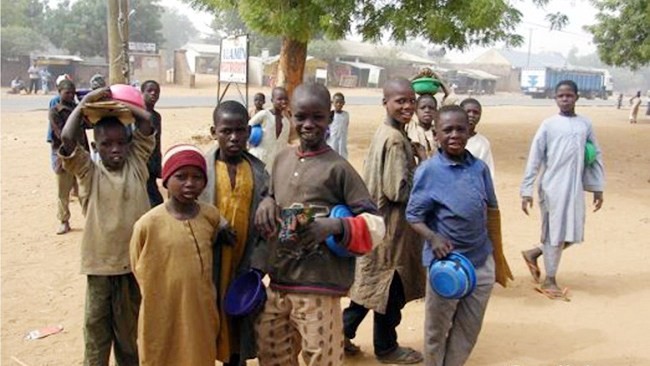
Estimates put the country’s out-of-school children at between 15million to about 20 million.
He explained that President Bola Tinubu’s administration was committed to evidence-based policymaking, stressing that access to accurate data should empower both the media and citizens to demand greater accountability from public office holders.
The minister said journalists must move beyond routine event coverage to investigative reporting that highlights gaps in the education sector and tracks government performance using verifiable evidence.
According to him, quality journalism backed by credible data would not only strengthen accountability but also improve education outcomes across the country.
Alausa also highlighted reforms being implemented under the Renewed Hope Agenda, including Technical and Vocational Education and Training (TVET), Science, Technology, Engineering and Mathematics (STEM), digital transformation, quality assurance, improved education governance and expanding access to education.
He noted that Nigeria had recorded three consecutive years without disruption of academic activities in universities, polytechnics and colleges of education, attributing the achievement to sustained engagement with tertiary institution unions.
The minister also disclosed that Nigeria now has 24 universities ranked among the world’s top 1,000 institutions, compared with 21 previously, with public universities occupying the country’s top four positions.
The summit, themed “Three Years of the Tinubu Administration: Assessing Reforms, Progress and Challenges in Nigeria’s Education Sector,” brought together policymakers, education stakeholders and journalists to evaluate reforms and challenges in the education sector.
Also speaking, the Minister of State for Education, Prof. Suwaiba Ahmad, urged journalists to support education reforms through balanced and responsible reporting.
“Education is the foundation upon which we build a productive economy, strengthen democratic institutions, reduce poverty and promote social cohesion,” she said.
The Executive Secretary of the Universal Basic Education Commission (UBEC), Aisha Garba, reaffirmed the commission’s commitment to ensuring that every Nigerian child has access to quality basic education regardless of background or location.
“The most important objective is that no child should be left behind. Regardless of background, location or income level, every child must have access to quality education,” she said.
Chairman of the Nigeria Union of Journalists, FCT Council, Grace Ike, called on the media to intensify efforts towards promoting accountability and public awareness in the education sector.
She stressed that government, parents, school administrators, policymakers and journalists must work together to address challenges affecting the sector.
The Special Adviser to the Minister of Education on Media and Communication, Ikharo Attah, also advocated evidence-based journalism, saying credible reporting must be guided by facts rather than assumptions.
Earlier, ECAN Chairman, Chuks Ukwauta, said the summit was organised to examine the achievements, reforms and challenges recorded in Nigeria’s education sector under the Tinubu administration.
Nigeria has one of the highest numbers of out-of-school children in the world, making the issue a major national development challenge. Despite years of government interventions, millions of children remain outside the formal education system due to poverty, insecurity, cultural barriers, inadequate school infrastructure, child labour, early marriage, displacement caused by conflict, and weak access to quality education, particularly in rural and underserved communities.