

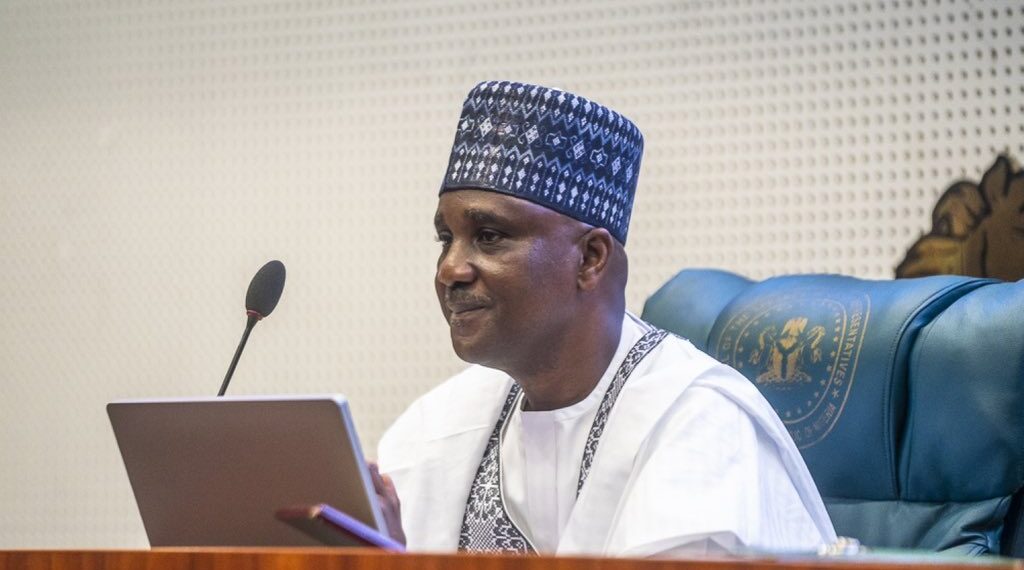

Abbas Urges Nigeria, Cuba To Strengthen Ties In Healthcare, Trade
The Speaker of the House of Representatives, Tajudeen Abbas, on Sunday called for the establishment of parliamentary diplomacy tailored to deepening medical exchanges, joint research, and investment in critical sectors of the Nigerian and Cuban economies.
According to him, when established, such a parliamentary framework must produce results leading to the signing of a Memorandum of Understanding, funded programmes and ratified treaties between the two nations.
The Speaker made the remarks in Abuja while playing host to a parliamentary delegation from Cuba, led by Fernando Llort, a member of the National Assembly of the People’s Power of Cuba and President of the Cuban Institute of Friendship with the People.
Represented by the Deputy Speaker of the House, Benjamin Kalu, Abbas lauded the diplomatic relationship between both countries and called for the strengthening of existing ties.
He highlighted strategic areas, including parliamentary and health diplomacy, trade and culture, biotechnology and pharmaceuticals, noting that their implementing policies in these areas will help birth a robust parliamentary partnership.
A statement issued on Sunday by the Chief Press Secretary to the Deputy Speaker, Levinus Nwabughiogu, quoted the Speaker as saying, “Nigeria’s foreign policy, guided by the principles of African solidarity and cooperation across the Global South, continues to prioritise partnerships that promote peace, development and shared prosperity.
“The 10th Assembly is committed to advancing this through laws that enable economic cooperation, cultural exchange, and global dialogue.
“We also recognise Cuba’s legacy of parliamentary solidarity, from decolonisation struggles to calls for global equity. It is both strategic and moral to formalise collaboration where our legislatures can deliver, through law-making, institutional strengthening, and parliamentary diplomacy that yields real benefits for our peoples.
“Our tools are laws, oversight, and convening power. The Nigeria–Cuba Parliamentary Friendship Group provides a platform to fast-track frameworks for medical exchanges, academic recognition, joint research, and targeted investments. Parliamentary diplomacy must yield real outputs: MOUs, ratified agreements, and funded programmes.”
He lamented, however, that “Bilateral trade between our countries is minimal. According to UN reports, Nigeria’s imports from Cuba were just US$2,380 in 2024. Yet our cultural ties run deep in music, sports, and literature. Let us convert this affinity into opportunities for artisans, agri-entrepreneurs, and creative industries.”
The speaker further noted that “Scholarships in Cuba, paired with Nigerian internships and reciprocal placements, can produce professionals fluent in international cooperation.
“Cuba’s record is proven: over 1,200 doctors in 21 ‘Henry Reeve’ brigades and tens of thousands still deployed worldwide. Joint training, health expertise exchange, and co-developed treatments can strengthen Nigeria’s health systems.
“Nigeria prioritises affordable medicines and vaccine capacity. Cuba’s biotech, including the Abdala COVID-19 vaccine (92% effective against severe disease in published studies), shows what is possible.
“Partnerships in research, tech transfer, and pilot manufacturing can boost vaccine production, protect public health, and create jobs while advancing Africa’s self-sufficiency,” he said.
He added, “Nigeria sees this relationship not as a one-way street but as a balanced exchange. We value Cuba’s achievements in health, biotechnology, and education, while Cuba can benefit from Nigeria’s 200 million-strong market, rich resources, vibrant creative industries, and continental leadership.
“From energy and agriculture to pharmaceuticals, tourism, sports, and culture, the opportunities are diverse and compelling. This is true reciprocity: Cuba brings tested knowledge, Nigeria offers scale and opportunity, and together, we can uplift our peoples and the wider Global South.”
Earlier in their separate remarks, the Cuban Ambassador to Nigeria, Miriam Palmer and the visiting Cuban parliamentarian, Fernando Llort, lauded the relationship between Nigeria and Cuba, saying they are working on issues of mutual interest to both countries.
Llort extended the invitation of the parliament to the deputy speaker to visit Cuba to enable them to exchange views on parliamentary diplomacy and other issues of mutual interest to both countries.
Nigeria and Cuba have shared diplomatic ties since 1974, with cooperation largely focused on education, culture, and health.
Over the years, Cuba has become a destination for Nigerian students pursuing medical studies while also offering scholarships and technical training in various fields.
Cuban doctors have worked across Africa, including in Nigeria, under health cooperation agreements that date back to the late 20th century.
Despite these longstanding ties, trade and investment between the two nations remain negligible.
According to UN data, Nigeria’s imports from Cuba stood at just over $2,000 in 2024 — a figure that underscores the untapped potential of the relationship.