


Electoral Bill: CSOs Demand Buhari’s Assent, To Stage Protest Tuesday
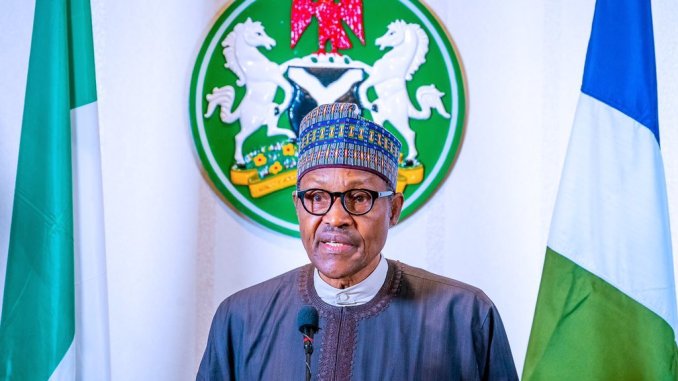
Following delay by President Muhammadu Buhari, in signing the reworked Electoral Act Amendment Bill, no fewer than 26 civil society organisations have resolved to embark on a protest on Tuesday if the President fails to assent to the bill in two days.
The coalition urged its partners to converge on the Unity Fountain, Abuja, for the demonstration.
The coalition include Nigeria Civil Society Situation Room, Yiaga Africa, Partners for Electoral Reform, International Press Centre, Institute for Media and Society, Nigerian Women Trust Fund, The Albino Foundation, Centre for Citizens with Disability, Premium Times Centre for Investigative Journalism, Labour Civil Society Coalition, Transition Monitoring Group, CLEEN Foundation and Civil Society Legislative Advocacy Centre.
Others are Women Advocates Research and Documentation Centre, Nigeria Network of Non-Governmental Organisations, Inclusive Friends Association, Enough is Enough, The Electoral Hub, Centre for Liberty, Take Back Nigeria Movement, International Peace and Civic Responsibility Centre, 100 Women Lobby Group, Women in Politics Forum, Raising New Voices, Millennials Active Citizenship Advocacy Africa and Ready To Lead Africa.
On January 31 2022, the National Assembly transmitted the reworked bill to the President for assent.
Buhari consequently forwarded it to the Minister of Justice and Attorney General of the Federation, Abubakar Malami (SAN), for legal advice.
Malami had hinted that he might advise the President to withhold assent if he (Malami) found the reworked bill to contain proposals hinged on personal interests.
The CSOs in a statement on Saturday by the Media Officer of Yiaga Africa, Moshood Isah, after an emergency meeting, urged citizens across the nation to “call on President Muhammadu Buhari to act on this matter of urgent national importance.”
The coalition said the bill allowed electronic transmission of results, strengthened the financial independence of the Independent National Electoral Commission and empowered the commission to reject falsified election results.
The statement read in part, “Further aware, the bill, when signed, requires INEC to issue Notice of Election not later than 360 days before the day appointed for an election. Therefore, the President has to give assent to the bill on or before February 22, 2022 if the dates announced for the 2023 elections are to be maintained.
“We are concerned that the delay in granting presidential assent to the Electoral Bill, 2022 will create legal uncertainties that threaten the integrity of the off-cycle elections in Ekiti, Osun, and the 2023 general election, which is 366 days away.
“The civil society community resolves to declare Tuesday February 22, 2022 as the national day of protest to demand immediate assent to the bill. Civil society networks will organise peaceful public direct-action activities to further the demand to assent the bill. We urge citizens across the nation to call on President Muhammadu Buhari to act on this matter of urgent national importance.”
The President has not shown any significant sign of signing the reworked bill 20 days after it was transmitted to him by the National Assembly.
By law, the President is expected to respond to the National Assembly’s proposal not more than 30 days after receiving it.
The bill was transmitted to him on January 31, 2022, meaning he has barely 10 days left to act on it. The President has in the last five years rejected electoral amendment bills five times.
The INEC Chairman, Prof. Mahmood Yakubu, had said last month that the commission would quickly release the timetable and schedule of activities for the 2023 general elections based on the new law once the bill is signed by the President.
However, there are indications that INEC will go ahead with its preparations rather than allow Buhari’s failure to sign the bill to delay its activities.
The National Commissioner for Voter Education and Publicity, Festus Okoye, said on Channels Television that the commission could conduct the 2023 general elections with the current Electoral Act 2010.
Okoye added that Buhari not signing the Electoral Act amendment bill did not affect the FCT council election that took place on Saturday as the poll went smoothly.
He explained that INEC is an agency of the government that works with existing laws and it would continue to do so.
When asked if the President’s refusal to sign the electoral bill affected the conduct of the FCT poll, Okoye said, “Not in any way.”
When asked if the commission would be able to deliver a credible election in 2023 if the President doesn’t sign the electoral bill, Okoye said, “As an electoral management body, our responsibility is to utilise the existing law and conduct our elections very well.”