

Charles III Crowned King At First U.K. Coronation In 70 Years
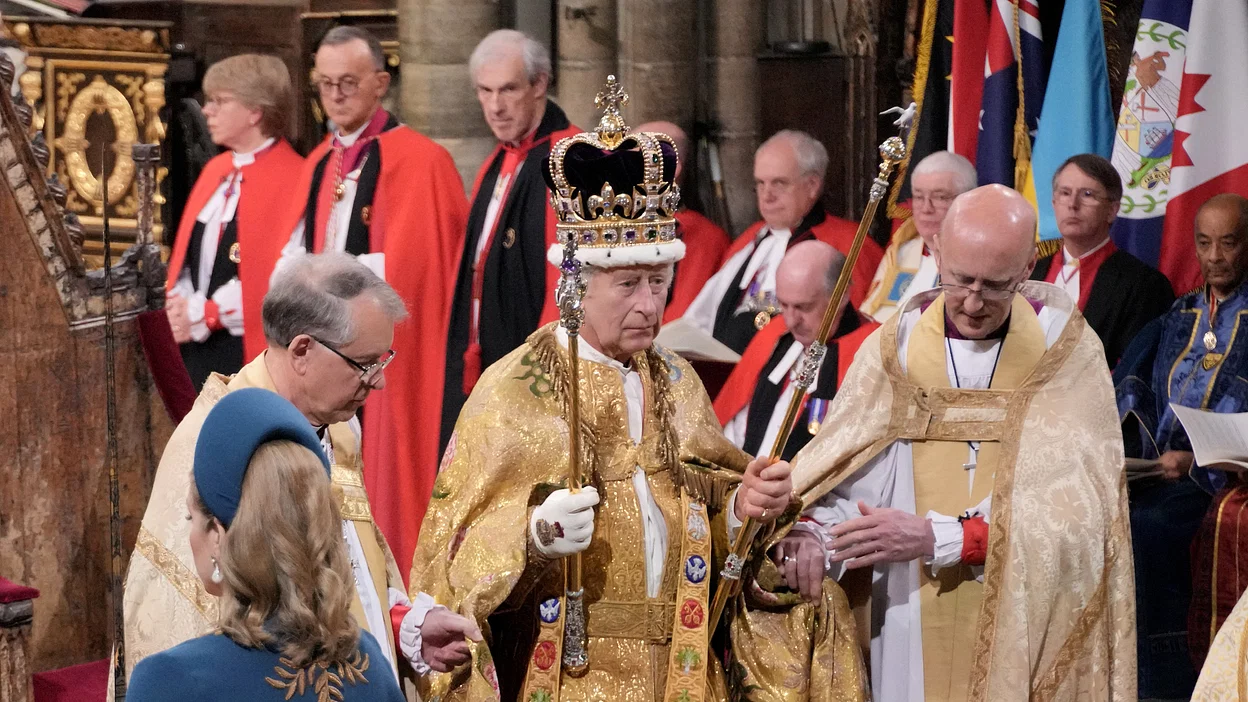
Charles III on Saturday finally met his date with destiny after a lifetime as heir to his late mother Queen Elizabeth II, as he was officially crowned king in the first coronation in Britain since 1953.
At 12:02 pm, the Archbishop of Canterbury Justin Welby placed the solid gold St Edward’s Crown on Charles’s head as a sacred and ancient symbol of the monarch’s authority.
Cries of “God Save the King” rang out from the 2,300-strong congregation at Westminster Abbey and trumpet fanfares sounded at the climax of the solemn religious confirmation of his accession.
Outside, ceremonial gun salutes blasted out across land and sea while bells pealed in celebration at churches across the country.
The build-up to the Christian ceremony of prayer and praise — steeped in 1,000 years of British history and tradition, with sumptuous robes and priceless regalia — has been mostly celebratory.
But even before Charles, 74, and Queen Camilla, 75, left Buckingham Palace for a rainy procession to the abbey, police arrested dozens of protesters using new powers rushed onto the statute book to crack down on direct action groups.
The anti-monarchy movement Republic — which wants an elected head of state — said six of its organisers were detained, while climate activists Just Stop Oil said 19 of its number were held.
Ceremonial vestments from previous coronations were reused, and the anointing oil — created from olives on groves on the Mount of Olives and perfumed with essential oils — was vegan.
Charles was anointed out of sight of the congregation behind a three-sided screen in front of the High Altar to the strains of Handel’s soaring anthem “Zadok the Priest”, sung at every coronation since 1727.
– Opposition –
Rishi Sunak — Britain’s first prime minister of colour, who gave a reading from the Bible at the service — has described the coronation as “a proud expression of our history, culture and traditions”.
But not everyone is convinced: polling indicates waning support for the monarchy, particularly among younger people.
Charles’s eldest brother Prince Andrew — sidelined due to his friendship with the late convicted paedophile Jeffrey Epstein — was booed as he headed to the abbey.
Another royal exile Prince Harry, who has criticised the family since leaving for the United States in 2020, attended the coronation on his own.
Overseas, Charles’s position as the hereditary monarch and head of state of 14 Commonwealth countries looks increasingly fragile.
Jamaica and Belize both signalled this week that they are moving toward becoming republics, while Australia, Canada and others may eventually follow suit.
Britons struggling with the soaring cost of living have meanwhile questioned why taxpayers should stump up for the coronation, with the bill estimated to be over £100 million ($126 million).
– Support –
Yet the huge crowds of royal fans that have been building all week on The Mall outside Buckingham Palace indicate that the royals still have a central role in British culture and history.
Many of those camping out to watch have flown in from abroad, underlining the royal family’s untouched position as Britain’s leading global brand.
Christine Wilen travelled from Niagara Falls in Canada for the event.
“I’m very excited to be here, to be part of this history,” said Wilen, wearing a visor and sweatshirt in Canadian colours.
“It’s just too good an opportunity to miss,” said Nick Demont, 60, outside the abbey. “There’s a good chance I won’t see another one.”
AFP