


Scientists Discover New Strain Of Coronavirus In Dogs
Scientists have discovered a new type of coronavirus which originated in dogs and can infect humans.
According to Daily Mail Uk, it is not yet clear if the bug poses a serious threat like its cousin SARS-CoV-2, which is the name of the virus behind Covid. But researchers who detected it claim they ‘don’t see any reason to expect another pandemic from this virus’.
The virus hospitalised eight people in Malaysia, including seven children — the youngest of whom was just five-and-a-half months old. Coronaviruses are a family of viruses in the same way that there are several types of influenza.
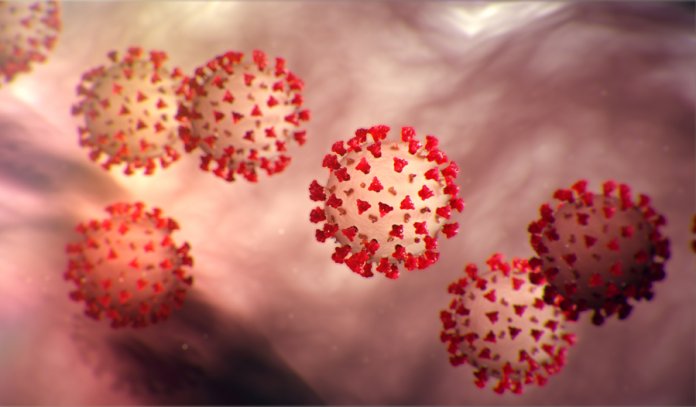
They are named for the distinctive appearance of their spikes; when seen under a powerful microscope, the spikes look like a crown (corona is the Latin for ‘crown’). Beneath these spikes is a layer of membrane.
This membrane can be disrupted by detergents and alcohols, which is why soap and water and alcohol hand sanitiser gels are effective against the virus.
Coronaviruses are expected to become more frequent as humans come into more contact with wildlife due to habitat destruction and climate change.
Covid is the disease caused by SARS-CoV-2 but there are six other coronaviruses that have been found in humans. Its origin has been linked to bats and pangolins but theories that it was leaked from a laboratory have not yet been ruled out.
Four of the human coronaviruses cause colds, which are relatively harmless.
The two others cause Sars and Mers, which are both deadly. Researchers at Duke University and Ohio State University named the new coronavirus CCoV-HuPn-2018.
It is believed to have first transmitted to humans from dogs. Sars is believed to have come from bats originally, while Mers was transmitted to humans from camels.
Seven of the eight patient who were hospitalised with the virus in Malaysia were children, with one was just five and a half months old.
One developed pneumonia but all recovered and were discharged after four to six days, following oxygen therapy to help them breathe. But the discovery suggests coronaviruses can be transmitted by domestic pets and underlines their danger.
Experts say the study, published in Clinical Infectious Diseases, could revolutionize how we identify respiratory diseases before they become potential pandemics.
Co-author Dr Anastasia Vlasova, of The Ohio State University, said: ‘At this point, we don’t see any reasons to expect another pandemic from this virus.
‘But I can’t say that’s never going to be a concern.’ The US team identified the novel canine coronavirus using the same molecular diagnostic tool they created last year to detect Covid.
Project leader Professor Gregory Gray, of Duke University, North Carolina, said: ‘How common this virus is, and whether it can be transmitted efficiently from dogs to humans or between humans, nobody knows.
‘What is more important is these coronaviruses are likely spilling over to humans from animals much more frequently than we know. ‘We are missing them because most hospital diagnostic tests only pick up known human coronaviruses.’
He analysed the archived nasal swabs of 301 people treated in a hospital in Sarawak in East Malaysia in 2018. Dr Vlasova grew the virus in her lab from one of the clinical specimens, which came from a child. By reconstructing its genome, they were able to confirm it came from a dog. It evolved from a coronavirus that afflicts dogs to infect humans and may contribute to respiratory symptoms.
Dr Gray said: ‘There are probably multiple canine coronaviruses circulating and spilling over into humans that we don’t know about.’ Sarawak could be a rich place to detect them since it is an equatorial area with rich biodiversity. He added: ‘Many of those spillovers are dead ends, they don’t ever leave that first human host.