

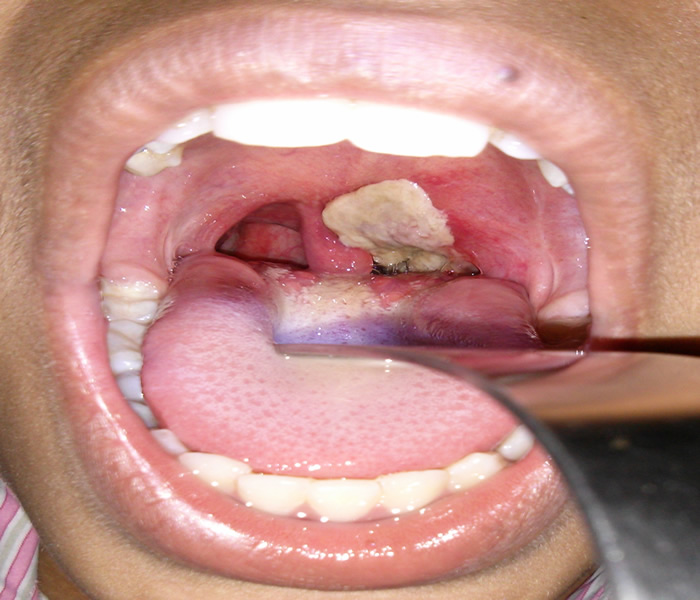

‘Don’t Treat Children With Diphtheria At Home’
A Professor of Paediatrics at the Department of Paediatrics, College of Health Sciences, University of Ilorin, Kwara State, Olugbenga Mokuolu, has warned parents against treating their children with diphtheria infection at home.
The don warned that though diphtheria is a vaccine-preventable disease, treating it at home could be dangerous and might increase the risks of death.
Mokuolu, who is also a Consultant Paediatrician at the University of Ilorin Teaching Hospital, said diphtheria is a very severe illness and not something they can manage at home with over-the-counter drugs.
The researcher disclosed that the solution to the disease outbreak is vaccination.
He advised parents to ensure their children are fully vaccinated from birth according to the National Programme on Immunisation Schedule.
According to the Nigeria Centre for Disease Control, diphtheria is a serious bacterial infection caused by the bacterium called Corynebacterium species that affects the nose, throat, and sometimes, the skin of an individual.
The latest data by the NCDC showed Nigeria has so far recorded a total of 123 diphtheria infections and 38 deaths across four states of the federation as of 22 January.
The data indicated Kano State recorded the highest with 100 confirmed infections and 32 deaths, followed by Yobe with 17 infections and three deaths.
The symptoms of diphtheria according to NCDC include fever, runny nose, sore throat, cough, red eyes (conjunctivitis), and neck swelling.
Speaking with our correspondent, Mokuolu said, “Ordinarily, diphtheria is one of the so-called vaccine-preventable diseases and it is part of the regular immunisation schedule.
“At this point, we should just ensure that babies get vaccinated according to the National Programme on Immunisation Schedule from birth.
“From six weeks of birth, we have the diphtheria-tetanus-pertussis vaccine (DPT vaccine) that is given to children which babies are supposed to receive at six weeks, 10 weeks, and 14 weeks.
“So, it is important that we keep this immunisation schedule properly to protect against this type of outbreak that is happening.”
The child health expert blamed the outbreak on a reduction in immunisation coverage.
“The current outbreak may not be unconnected with the fact that there has been some reduction over time in coverage of immunisation. It is a vaccine-preventable disease. Our solution will be a vaccine.
“To continue to be vigilant to isolate cases as they occur and to ensure that those diagnosed with the infection are giving their treatment. It is eminently vaccine preventable”, he noted.