

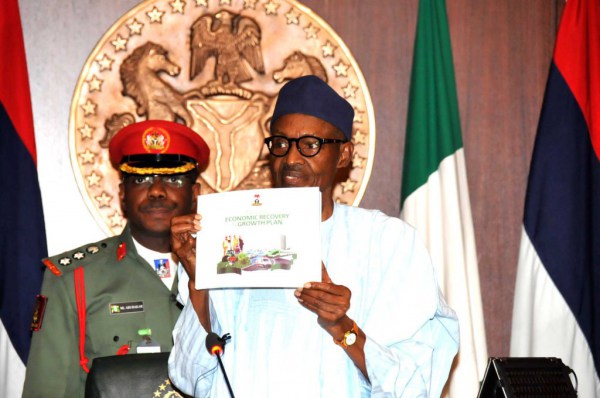

Economic Recovery Plan Needs Cheap Funding To Be Successful- Ajakaiye
For the recently launched Economic Growth Recovery Plan of the Federal Government to be effective and not be another white elephant project, economic analysts have stressed the need to tap into low cost funding for financing the growth if the country.
Speaking variously on the theme, “Financing Nigeria’s Economic Recovery and Growth” at The Billion Lecture organized by the Center for Financial Journalism in Lagos yesterday, economists said there is need for government to tap into the various financing options and ensure the implementation of the plan.
Executive Chairman of the African Center for Shared Capacity Development Building, Prof Olu Ajakaiye, who delivered the lecture said, government needs to look at financing options such as taxation, diaspora bonds; project tied bonds as well as the pension fund.
Prof Ajakaiye further stressed that “any attempt to finance through high cost will compromise the validity of the plan. Likewise, Chief Consultant at B.Adedipe who noted that this was not the first time the government would come up with an economic plan said the problem has always been implementation.
According to him, there is need to do away with internal inconsistencies that could hinder the execution of the plan. He also noted that sometimes the unwillingness of the stakeholders in seeing a project through could serve as a deterrent.
Citing the Lekki-Epe Expressway as an example, he said, the public had called for a Public Private Partnership in building the road, “as soon as the road was done and they put tolls, the same people who called for PPP said why they should be paying tolls after they have paid taxes.
“So sometimes plans don’t get executed not because of government’s inability but the stakeholders are unwilling to follow through.” He also called on the government to ensure that the plan is one that will implement projects that will reflect the programs and lay out the policy of the government.
Meanwhile, Prof Ajakaiye said in sourcing for cheap funding for reviving the economy should not increase taxation as planned as it would be counter-productive for government to increase the amount payable in taxes now.
Instead, he said government should drive volume. “The government must not plan to increase tax revenue in a way that would increase cost. They should not be thinking of raising Value Added Tax (VAT) to 10 per cent, rather, they should mobile more people to pay the five per cent.
“Increasing tax at a time like this will only make matters worse, so they need to focus more on the volume. We have done it before and can still do it again. It will be necessary for the Federal Inland Revenue Service and the Federal Ministry if Finance to sustain the ongoing reforms aimed at plugging the leakages especially the introduction of the Tax Identification Number system, approval of reasonable incentives for staff of FIRS , sustained capacity building and application of information technology in tax administration.
“Tax evasion and avoidance are among the set of challenges plaguing tax administration in Nigeria and other countries. The predisposition by citizens to avoid and evade tax tends to be higher the tax rate, the more complex the tax laws, the larger the loopholes in the tax laws, the greater the perception on the part of citizens regarding poor service delivery and value for money which tends to lower the sense of civic responsibility among tax payers