

Falana Urges Social Media Ban For Under-16s
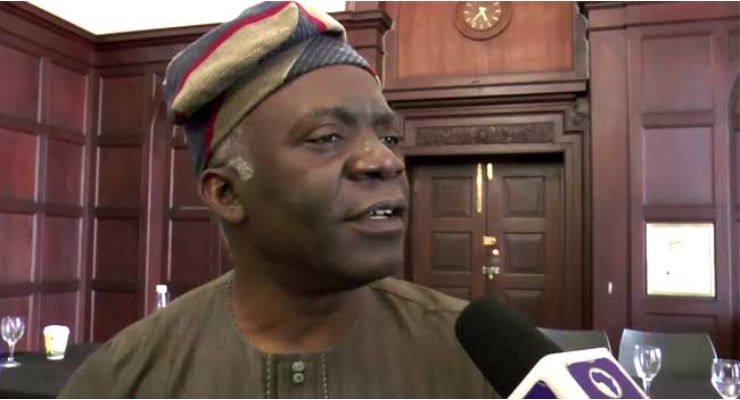
Human rights lawyer and Senior Advocate of Nigeria, Femi Falana, has called for a restriction on social media access for individuals under the age of 16 in Nigeria, echoing growing global concerns over the impact of online platforms on young people.
The Dare2Debate initiative is actively building the next generation of leaders and critical thinkers. Its core program, “Think, Speak, and Lead,” leverages debate among secondary school students to cultivate essential public speaking and intellectual skills.
Speaking of the need for protective measures, Falana, who was a special guest at the competition, argued that such restrictions are essential to safeguard children’s well-being in a world increasingly influenced by digital interactions.
He said, “Well, like I did say, there is an ongoing debate around the world with respect to the use of telephones or access to the social media by young people. Some countries are restricting it. Australia has just insisted that you cannot access social media if you are under 16.
“And, once it is adopted by the United States or UK, in particular, Nigeria, being a neo-colony, will also be bound to follow suit. But one way or the other, it certainly has to be regulated in the interest of our children.
“Do you know what I mean by a neo-colonial country? A country that claims to be independent but is still very much colored in all circumstances. Nigeria is the color of the United Kingdom.”
Speaking on the notion that poverty is fuelling criminal activities in Nigeria, Falana was opposed to it, saying many people were pushed into the act because of poverty and unemployment.
He said, “First of all, Nigerians are not criminals. If you compare the crime rate here with the United States of America, or some other countries, or South Africa, you will know that Nigerians are not into serious crimes, but because poverty and unemployment have been allowed by the government to be the lot of our people, many people are pushed to criminality.
“However, we have cases of underemployment in Nigeria. So it is not totally true, right, that there are no job opportunities, but we choose, for instance, many of our people who go abroad. Jobs they consider ‘infra dignitatem’ here (below their standard), is what those are jobs they jump at abroad.
“For instance, graduates who are gainfully employed there are made to believe that once they travel abroad, the sky is the limit of opportunities for them. So they get there and they are forced to embark on dirty jobs.”
Falana further said Nigerian artisans are poorly educated because of what he described as a ‘distorted educational system’ in the country.
He said, “Again, because of the distorted educational system, many artisans here are poorly educated. Hence, today, most of the young artisans and young people that are fixing the plumbing and even laying tiles are from Togo, Ghana, and Benin Republic, right? Even Chinese nationals, Indian nationals are now handling jobs that Nigerians consider below their standard or dignity.
“In some countries, on a daily basis, the figures of unemployment are published, so it is the duty of the government to work by those figures and ensure that governments perform their duty.
“But here we are made to believe that it’s not the business of the government to provide opportunities. What is the business of the government? Many of those who are in government, who are members of my generation, without writing letters of employment, they were employed in this country.”
Speaking on the Debate, the lead organizer of Dare2Debate, Davies Ikpoyi, said the initiative was designed to make Nigerians know that students can actually get better with conversations, with thinking, with public speaking, and with the way they address conversations and situations.
He said, “That’s why we’re here, because the essence of the debate is to train senior secondary school students, youth majorly, on public speaking, critical thinking, and mind management.
“And all of these usually culminates to something bigger, which happens to be the debate events, where everybody comes together to debate for a just cause. And I mean a just cause; it is not a show of force.
“Debates are usually a battle with words, knowledge, and weight. So the essence of all of those trainings was because we wanted to do this, and that’s why we’re here.”
During the debate, three schools including C.M.S Grammar School, Bishop Howells Memorial Grammar School, and Arester Divine School, all in Lagos, participated in the competition.
According to the panel of judges led by its chief judge, Oludolapo Adewole, two schools including C.M.S Grammar School (160 points) and Bishop Howells Memorial Grammar School (142 points) proceed to the final stage, while Arester Divine School got 105 points.
At the end of the maiden edition of Dare2Debate, organised by HACmedia, C.M.S Grammar School emerged the winner with 77 points and a cash prize of N300,000.
Bishop Howells Memorial Grammar School came second with 75 points and a N200,000 cash prize, while Arester Divine School with 70 points got N100,000.