

Mixed Reactions As FG Cuts Duties On Pharmaceutical Products, Rice, Cars, Others
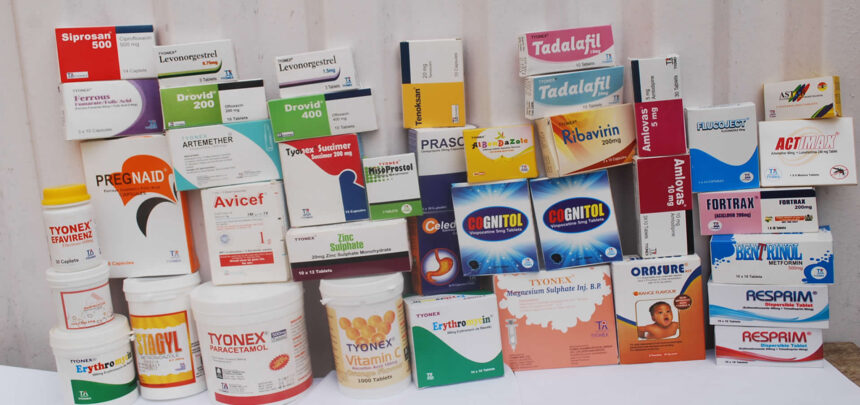
Mixed reactions yesterday trailed the Federal Government’s approval of the new 2026 fiscal policy which reduced import tariffs on drugs and pharmaceutical products, cars and rice, among others.
While players in the pharmaceutical sector hailed government’s new move, rice producers and those in the automobile sector regretted the move, said the policy would be inimical to their business.
Recall that the Federal Government had in a document dated April 1, 2026, by the Minister of Finance and Coordinating Minister of the Economy, Mr. Wale Edun, approved sweeping tariff adjustments across 127 product lines, including antimalarial medicaments now pegged at 20 per cent, as part of efforts to stimulate growth and ease the cost of critical imports.
While pharmacists say the policy could improve access to essential medicines, they insisted that weak regulation, counterfeit drugs, and poor support for local manufacturing remained major obstacles.
The President of the Pharmaceutical Society of Nigeria, PSN, Ayuba-Tanko Ibrahim, described the tariff cut as a positive step but cautioned that the gains would depend on complementary policy actions.
“A drop in duties on drugs and pharmaceutical products is quite laudable. In normal circumstances, this should signpost a drop in prices of these products and promote accessibility to drugs and healthcare, albeit legitimately.
“The PSN appreciates and commends the commitment of the federal government in the ensuing scenario,” he said.
However, he warned that more needed to be done to sanitise the sector, Ibrahim said: “It is noteworthy that the federal government must do a little more in terms of regulation and control of drug matters in Nigeria.
‘’Government must see a need for urgent intervention with a template akin to an all-purpose special vehicle that can help fix fundamental issues pertaining to local manufacture and drug prices.’’
He further highlighted the persistent challenge of fake and counterfeit medicines, stressing that “we must redress the issue of fake and counterfeit drugs, especially because of the unending cycle of a preponderance of unregistered pharmaceutical premises.
‘’There is also a need to support local content in Active Pharmaceutical Ingredients, APIs, and vaccines availability to increase the contribution of the pharmaceutical sector to national GDP.’’
He also called for the implementation of long-delayed policies.
“Once again, we must ensure that the Federal Ministry of Health-approved National Drug Distribution Guidelines, NDDG, sees the light of day. For this and more, we have in the past urged the federal government to set up a presidential committee on the Pharma sector which will be driven by a seasoned registered pharmacist.
“Lawfully and experientially, only the technical skills of a pharmacist can fix this mandate,” Ibrahim stressed.
On his part, former PSN President, Mr Olumide Akintayo, said the tariff cut aligned with the National Drug Policy 2021 but questioned why similar interventions in the past failed to yield expected results.
“We must salute the sagacious conduct of the Federal Government for another well-intended move to improve accessibility to affordable drugs in line with the National Drug Policy 2021.
“This development throws up a kaleidoscope of colours, but the critical and fundamental question is why we are not getting results from the paradigm shifts the government attempts to bring to bear in the pharma sector,” Akintayo added.
According to him, the problem lies in poor implementation, driven by the wrong expertise.
“There is one major reason, which borders on the perennial utilisation of wrong drivers to move a purely creative endeavour like the pharma sector.
‘’Recall the attempt of the federal government to reduce drug prices through an Executive Order about two years ago. We warned that the move would be dead on arrival if salient professional parameters were not built ab initio into the concept. The results are there for all to appraise today,” he said.
Akintayo called for a return to foundational reforms, insisting that “we must start from basics, including redressing regulatory fees in our sector, while also allowing the trade and commerce ministry to handle certain fundamental approvals wrongly appropriated by some MDAs, probably on the basis of naivety,” he noted.
Similarly, National Chairman of the Association of Community Pharmacists of Nigeria, ACPN, Mr Ambrose Ezeh, called for a change in government strategy, insisting that technical issues in the sector required professional leadership.
“For the umpteenth time, we strongly solicit a change of strategy in government’s resolve to reduce drug costs.
“This is both a technical and professional matter best left in the hands of a Presidential Committee on an ad hoc basis with defined terms of reference within a given timeline,” Ezeh said.
While emphasising the role of pharmacists in policy coordination, he said further: “This might work out if the federal government consults the PSN to recommend fit and proper persons for such a national assignment.
‘’You will agree that similar efforts not coordinated directly by registered pharmacists have failed repeatedly in our experience.’’
Also reacting, Chief Executive Officer of Engraved Pharmacy, Mr Jonah Okotie, said the tariff adjustments showed marginal gains in some areas but little change in critical drug segments.
“Compared to 2023, nothing has changed for antimalarial products. It’s still the same 20 per cent tariff for imported products,” Okotie said but noted modest relief in medical devices.
“On breathing apparatuses and gas masks, there is a reduction from five per cent to zero per cent, which is an improvement and is expected to see the prices on these devices come down,” he stated.
According to him, while the gains may appear limited, they are still significant.
“Though it looks small, it is a very welcome development,” Okotie added.
He stressed that the broader objective of boosting local pharmaceutical production remained largely unmet.
“Both the 2023 FPM and the 2026 FPM are supposed to promote and enhance local production capabilities, but more needs to be done to make this a reality,” he said.
Reduced rice import duty discourages farmers – AFAN
Reacting to the tariff cut yesterday, the President, All Farmers Association of Nigeria, AFAN, Mohammed Magaji, described the Federal Government’s action as discouraging to Nigerian rice farmers.
He said: “It discourages the Nigerian farmers from going to the farm, honestly speaking, because there is no good price, there is no market.
“Unfortunately, the price of inputs, including fertilisers, agrochemicals and the rest are going up. The government should have a rethink on this policy.
“We are appealing to the government to have a rethink on it and give us a chance to produce what we eat and eat what we produce.”
Serious setback for farmers – JetFarmsNG
On his part, the Chief Farmer of Africa and Team Lead, JetFarmsNG, Jeremiah Olanrenwaju, said: “This policy is a serious setback for local rice farmers. Reducing import duty on bulk rice from 70% to 47.5% and broken rice to 30% will make imported rice significantly cheaper, putting immediate pressure on locally produced rice.
‘’For farmers already dealing with high input costs, logistics challenges, and limited access to finance, this creates an uneven playing field. At harvest, many of us may be forced to sell below cost, leading to losses and discouraging further investment in rice production.