

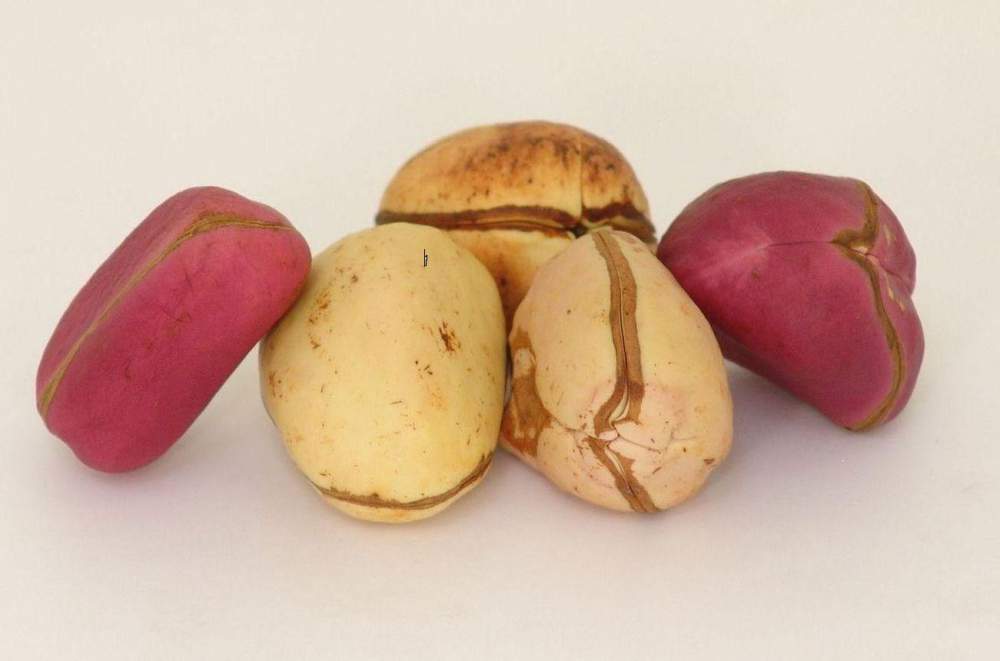

Why Women Don’t Break kolanut In Igboland- Monarchs, Leaders
Kolanut is vital to Igbo tradition and culture. It is needed in any social gathering of Ndígbo. No important Igbo ceremony, big or small, proceeds without the presentation and breaking of kolanut.
In Igbo land, kolanut is a symbol of peace, hospitality, and goodwill.
In fact, without kolanut, any ceremony in Igbo land is deemed incomplete. Besides, Igbo attach importance and meanings on the number of lobes each nut carries, connoting varying meanings such as good and bad omen, productivity, prosperity, among others.
However, in spite of this respect and recognition accorded kolanut in Igbo land, women are not allowed to perform the rituals and to break kolanut.
Some Igbo traditional rulers and leaders who are the custodians of culture and tradition share their view on this.
Kolanut is more of spiritual matter, it will be an abomination for women to break it – Ebonyi Monarch
The traditional ruler of Nkaliki Unuhu Achara autonomous community in Ebonyi State, Ezeogo Sunday Oketa said that it is an abomination for a woman to break kolanut in Igbo land. He said men are revered with matters of tradition and custom, and use kolanut to communicate with the ancestors.
“We use kolanut to communicate with the ancestors and pray to our gods. Women cannot pray with kolanut because of their monthly menstrual period. So, our ancestors forbid women from performing such functions. That is why at women’s occasions, they will call a man or little boy in their midst to break the kolanut.
“The foundation of Igbo land is laid by the man. The man is the head of the family recognised by God and if a woman breaks kolanut, she violates the custom and tradition and the ancestors will not accept the prayer. It is an abomination for any woman to break kolanut in Igbo land no matter the position she occupies.
“It is the kolanut that is used to seek for solution when there is problem or disaster in a community. It is used for divination and sanctification of our land. No matter the level of Christianity or politics, women cannot pray with kolanut because of their impurity by nature”, Oketa explained.
Women’s monthly menstruation makes them impure to perform the traditional rituals involved in breaking kolanut – Enachoken Abiriba
The traditional ruler of Abiriba Ancient Kingdom, Eze Kalu Kalu Ogbu (Enachoken Abiriba IV), attributes it to spiritual reasons. He said though there was actually no known reason behind the ancient tradition, but opined that it could possibly be because of their monthly menstruation. “Breaking of kolanut is deemed a spiritual thing, therefore a woman menstruating can’t perform that. And because the thing could come at anytime, it was best to avoid women in this traditional spiritual process.”
He argued that in Igbo land, since a menstruating woman should not touch sacred things, it would not be proper to allow women get involved in kolanut breaking rituals.
The monarch, however, argued that there was nothing wrong with menopausal women breaking kolanut.
Kolanut breaking is a sacred ritual which invokes the blessings of ancestors and deities – Enugu monarch
On his own part, the traditional ruler of Igga Ancient Kingdom in Uzo-Uwani Local Government Area of Enugu State, Igwe Herbert Ukuta, explained that the rituals of kolanut breaking is an exclusive reserve of the men folk because it invokes the blessings of ancestors and deities of the land.
He further explained: “Women generally do not break kolanut due to cultural and spiritual customs rooted in ancestral and patriarchal practices.
“The kolanut holds profound spiritual significance in Igbo culture, symbolizing respect, hospitality, and a connection with the ancestors. The act of breaking the kolanut is considered a sacred ritual that invokes the blessings of the ancestors and deities.
“Traditionally, men, especially elders, are seen as the primary intermediaries in these spiritual communications.
“Igbo society has historically been patriarchal, with men occupying most spiritual, leadership, and ritual roles. Since breaking the kolanut is a ceremonial act involving prayers and blessings, it is reserved for men, particularly the eldest male or the host.
“Certain spiritual taboos dictate that only men can perform this ritual to maintain spiritual order and avoid perceived negative consequences.
“In some communities, it is believed that women handling the kolanut in ceremonial contexts could bring misfortune or offend the ancestors.
“However, customs can vary slightly from one Igbo community to another, and some contemporary practices are beginning to challenge these traditional norms.”