

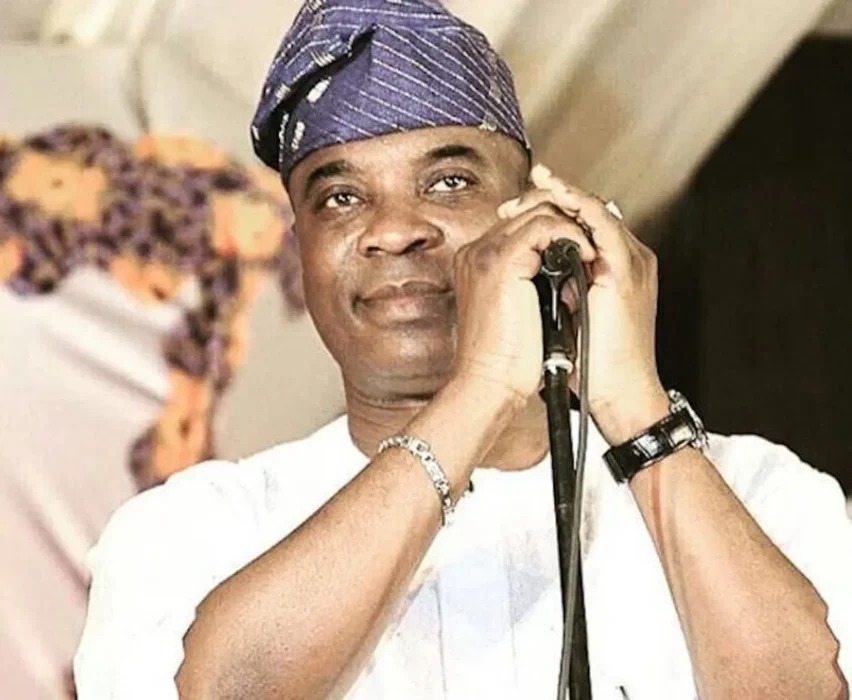

KWAM 1: When The Road To The Crown Becomes The Road To Reckoning
By Otunba Abiodun Olufowobi
There are moments in the long arc of destiny when a man’s ambition outruns his preparation, and the very dream he pursues becomes the lantern that exposes his own shadows. In every kingdom, there comes a season when ambition wakes a man before dawn and whispers to him that he is more than he has been told. So it was that mythical whisper that made the hearts of many Ijebu-Ode Omobas leap with aspiration at the opening of the Awujale succession race. The call of the crown touched something ancient in them.
Until then, their claimed royal identities have never been questioned. They moved among the people with the ease and pride of their assumed heritage. When they entered gatherings, elders nodded and saluted them as one acknowledges a familiar branch on a great ancestral tree. But the moment they stepped forward as contenders for the Awujale stool, the revered throne awakened its own guardians. The Ijebu stool does not accept claims at face value; it demands proof that can withstand fire. The Awujale crown is not an ornament; it is a covenant. It demands roots, not rumours. Blood, not bravado.History, not hearsay.
Such is the fate of KWAM 1, the Olori Omoba of Akile Ijebu, whose failed bid for the Awujale throne has opened the floodgates of questions he never imagined would be asked—questions about the veracity of not only his latter-day Fusegbuwa Ruling House claim but even his long-claimed affinity with the Fidipote Ruling House, which he had proclaimed as far back as the 1970s in Volume 1 of his professional discography.
Before the contest for the Awujale throne, KWAM 1 had walked through his native Ijebu-Ode with the quiet confidence of lineage. The late Awujale had honoured him with the honorary title of Olori Omoba Akile Ijebu. People greeted him as Olori Ọmọ Ọba, and he wore that greeting like an inheritance stitched into his skin. But the day he submitted himself for consideration as the next Awujale — the day he stepped into the sacred corridor where kings are weighed, not by fame but by fibre — everything changed.
The moment his name entered the contest, what followed was not hostility but duty. Genealogies were unfolded like ancient maps. Family lines were recited back to the founding soil. Archived documents were summoned from colonial chests. Names were traced across generations with the precision of a diviner reading cowries.
As the Kingmakers sifted through history, cracks began to appear in the story he had carried unquestioned all his life. Old doors creaked open. Forgotten documents resurfaced. Elders who had been silent for decades found their voices again. Genealogies were recalled not from emotion but from memory sharpened by duty. And like water following the path of least resistance, whispers grew into inquiries, and inquiries hardened into investigations.
Suddenly, the same credentials of royalty he had carried unchallenged for years were placed under the unforgiving glare of scrutiny. Dates no longer aligned. Names long assumed to be ancestors revealed no trace in the royal lineage. Claims that once sounded noble began to fracture under the weight of archival truth.
It was not malice that pursued the revered Olori Omoba; it was the throne itself demanding clarity. For when a man seeks the crown, he must also be ready to meet the mirror it carries.
Thus, for KWAM 1 and all the failed “Orisunmades,” the failed attempt became a turning point. What began as an aspiration ended as an interrogation of identity. The prestige of being called an Omoba dissolved into the necessity of proving it. They discovered, painfully, that while the world may accept a title casually, the custodians of tradition never do. The Awujale throne is sacred. Its doors open only to those whose roots can withstand the storm of verification.
Therefore, for KWAM 1 and the other unsuccessful contenders (save those who failed on grounds unrelated to royal lineage), it may seem that the failed attempt at becoming the Awujale will not be the true blow; the real wound will be the interrogation of their ancestry and their claimed affinity with the ruling houses. The throne they sought may not have merely rejected them — it may have unmasked them. It forced them into a reckoning between the lineage they claimed and the lineage they could prove.
And so, by the time the contest ends with the successful contender chosen, all the “Orisunmades” shall be left with a question far heavier than the crown they sought:
Who were they, truly, before the dream exposed them?
I therefore respectfully submit that sometimes the voluntary choice of seeking the path to an ancient and revered throne like the Awujale of Akile Ijebu is not meant to elevate a man, but to reveal him to himself.
13.12.25
PABIEKUN