

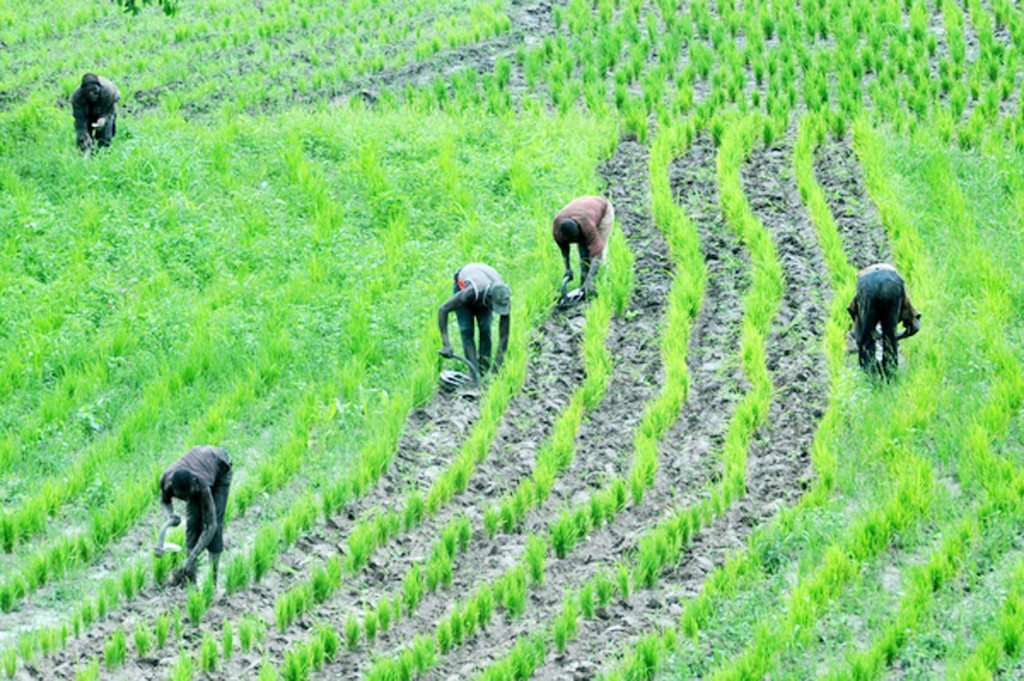

“This training programme will no doubt improve agricultural production, train new sets of farmers that will drive the development of agriculture, create employment opportunities for new generation of youths, contribute to the food security of the State, improve the standard of living of youths through self-sufficiency in agro-based enterprises and increase economic activities of the surrounding communities. Suffice it to say that the trained youths will create jobs for farm attendants, artisans and other ancillary workers,” the Commissioner added.
According to the Commissioner, the State Government would extend the School Agricultural Programme (SAP) to correctional schools in the State in order to further stimulate the interest of the youths in agriculture particularly at that period in their development.
“The major aim of the Schools Agricultural Programme (SAP) is to promote practical and commercial agriculture among youths in schools within the State with the aim of empowering students with sound and practical knowledge of agriculture to complement the theoretical aspect taught in the classroom. The SAP intends to increase the awareness of students in agricultural productions and also to see agriculture as a source of livelihood and a major wealth creator,” Prince Lawal averred.
The Commissioner also pointed out that the State Government would upgrade and expand laboratory services to internationally recognized standard by providing improved feed quality control equipment as well as soil and water testing equipment and animal health detection equipment thereby bringing about an enhanced and improved working environment and capacity training of Officers.
He assured that Government would not fail to enforce laws on food and feed safety, hygiene and traceability as well as on the movement of carcasses across the State adding that a Meat Commission Policy that would guide the movement of meat in the State would soon be unfolded.
The Commissioner noted that the expected impacts of the upgrade of the laboratory centers and the Meat Commission Policy include wholesomeness of feed and feed safety through testing of feed ingredients, reduced cost of production as a result of proper diagnosis of animal health challenges, accurate test of soils and water for efficient management of resources and hygiene movement of quality meat across the State.