

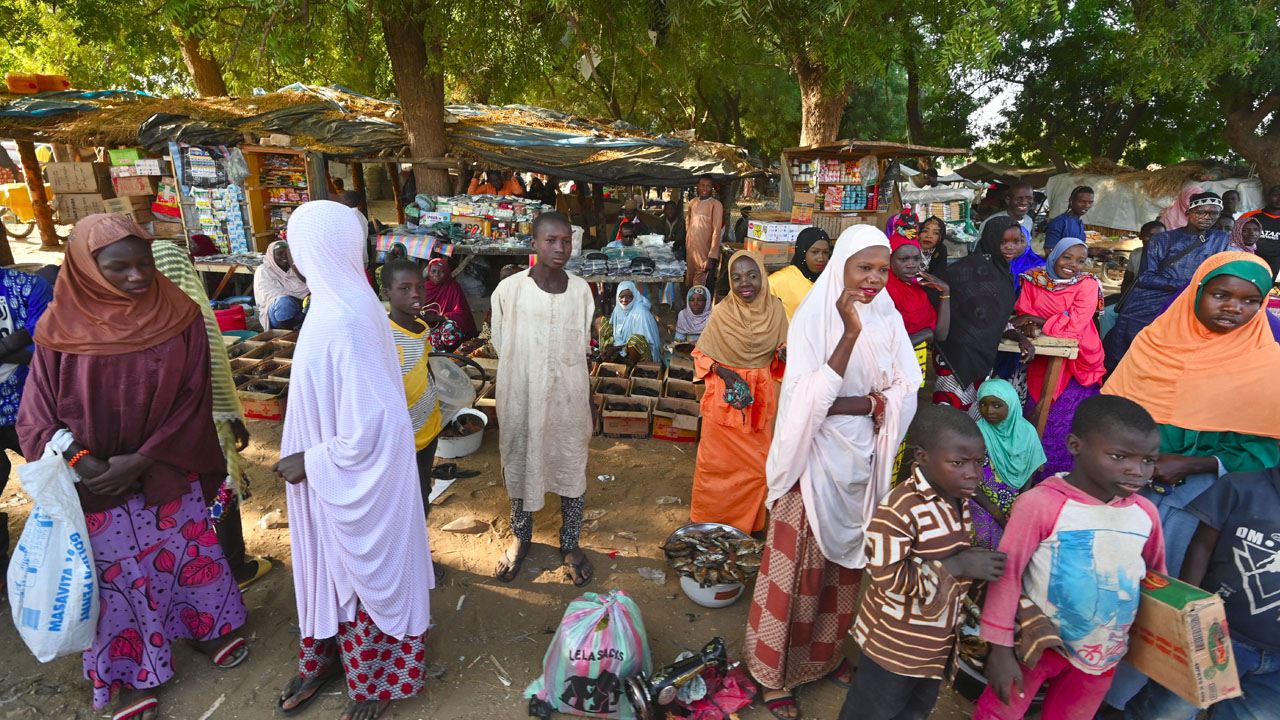

Niger Set For Historic Transition In Presidential Vote
By AFP
Niger hopes to make history on Sunday when elections set it on course for its first-ever peaceful transition of power despite a raging Islamist insurgency and economic woes.
The world’s poorest country by a key UN benchmark, the Sahel nation has never had two elected leaders hand over power since independence from France 60 years ago — the last coup was only a decade ago.
The man who has been in charge since then, President Mahamadou Issoufou, has gained high marks for announcing that he will hand the baton to his elected successor.
Two other nations in West Africa, Guinea and Ivory Coast, have been rocked by violence this year after their heads of state pushed through changes to the constitution.
They declared their counter on presidential limits had been reset to zero, enabling them to bid for a third spell in office — a move that triggered bloody protests.
“My most burning desire is to hand over power in 2021 to a democratically-elected successor,” Issoufou has said.
“This will be my finest achievement — it will be a first in the history of our country.”
French President Emmanuel Macron has heaped praise on Issoufou, describing him as an “example for democracy” while his foreign minister, Jean-Yves Le Drian, declared “the quality of the (December 27) elections will be a benchmark for all of Africa.”
Others have sounded a more sceptical tone, pointing to the dominant role played by the army, which in 2010 forced out a highly popular president, Mamadou Tandja, who had his eyes on a third term.
Issoufou “isn’t bidding for a third term because he doesn’t want it, but because he doesn’t have the choice,” said Bounty Diallo, a former soldier and professor at the University of Niamey.
Security crisis
Another flaw in the rosy picture is the absence of a prominent opposition candidate.
Former prime minister Hama Amadou, 70, was last month barred from contesting the vote on the grounds that in 2017 he was handed a 12-month term for alleged baby trafficking — a charge he says was bogus. In March, he was given a presidential pardon as he was seeing out his sentence.
Mohamed Bazoum, 60, a former interior and foreign minister who is Issoufou’s designated successor, is the front-runner on Sunday, after a campaign dominated by the issue of security.
Niger is being hammered by jihadists from neighbouring Mali and from Nigeria, the cradle of the decade-old insurgency launched by Boko Haram, and by armed gangs.
Last year more than 250 people died and there were more than 250 kidnappings, according to UN figures.
Jihadist attacks have displaced hundreds of thousands of people and have come closer and closer to the capital Niamey.
In August, six French tourists and their two Nigerien guides were slaughtered in the Koure National Park, just 60 kilometres (37 miles) from the city.