

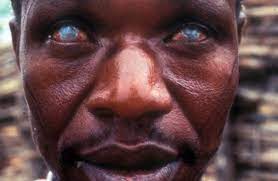

50 Million Nigerians At Risk Of Onchocerciasis – Expert
Apparently worried that over 50 million Nigerians are still at risk of onchocerciasis, the Director, Neglected Tropical Diseases (NTDs), Federal Ministry of Health, Fatayi Oyediran has lauded the capacity building training organized by the department of Zoology of Osun State University for Scientists and Entomologists to tackle the menace of black flies.
Oyediran who expressed worry over the numbers of Nigerians at the risk of the disease at Osun State University, Osogbo, during the flag off of a two-week capacity building training to stem the trend said the already affected people cut across 40,000 communities in 32 states and the Federal Capital Territory.
He noted that Osun State university has been pro-active and outstanding in researches on public health, entomology and gave assurance of federal government support adding that his ministry takes cognisance of the assemblage of pool of young scientists and entomologists for training at the workshop.
However, the Principal Investigator, Prof M. A. Adeleke, stated that Nigeria is currently winning the war towards eliminating onchocerciasis as public health disease.
He said: “Our studies on the traps, pilot studies on slash and clear and black fly breeding sites validation in the last 5 years have been impressive and prompted more studies to inform policies on vector control in Nigeria.
“We intend to train entomologists/Scientists on critical skills in entomology such as breeding sites prospection, fly catching, slash and
clear and trapping towards retaining active scientists as we are cruising to the elimination of oncho in Nigeria,”.
Meanwhile, the Vice Chancellor, Osun State University, Prof. Odunayo Clement Adebooye stressed the need for Nigeria to double her scientific research to get out of the burden of parasites inimical to public health in the society.
He commended Professor Monsur Adeleke for blasing the trailon grantsmanship in the university adding that the university has the capacity to domicile research findings.
ENDS