

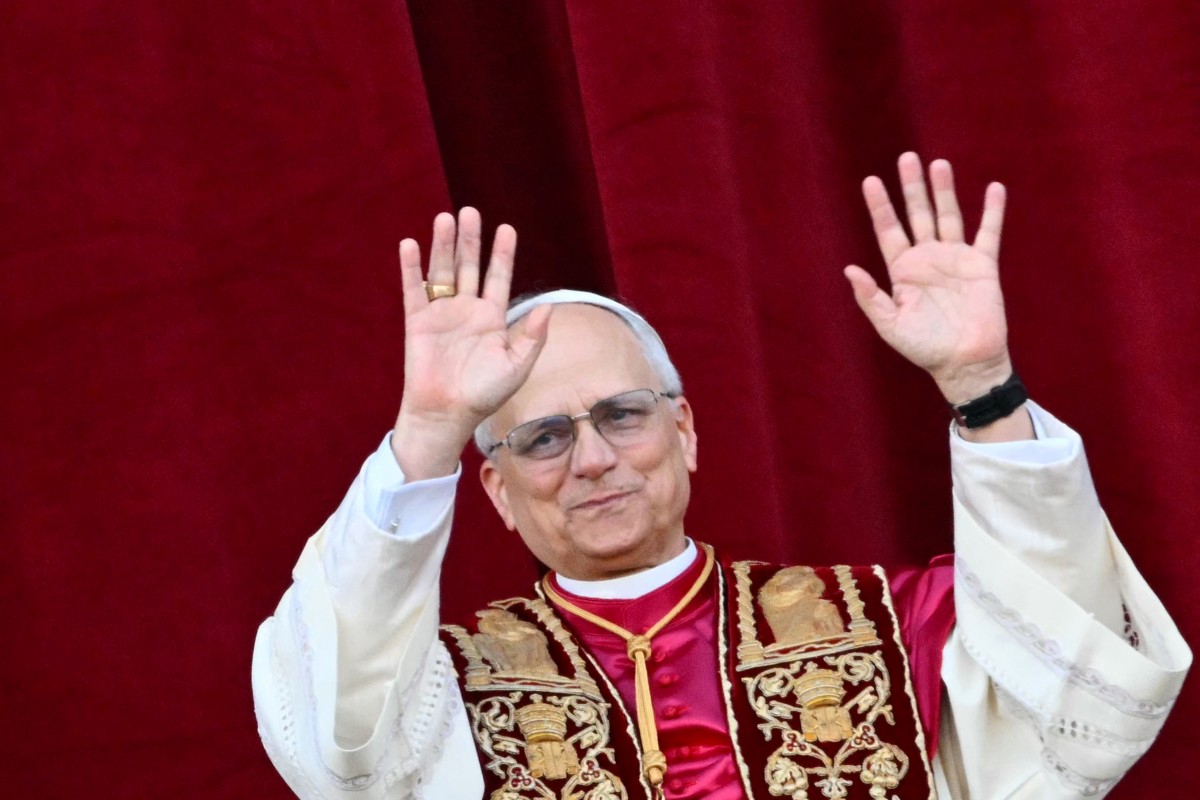

Pope Warns Against Risks Of AI Algorithms
Pope Leo XIV on Saturday stressed the risks of generative artificial intelligence, how it could usurp human identities and relationships, influence public opinion and deepen social polarisation
In a message marking the World Day of Social Communications, the pope said AI systems reflect the worldview of their creators and can shape patterns of thought by reproducing biases embedded in the data they process.
“The challenge… is a matter of protecting human identity and authentic relationships,” the pontiff said.
Leo XIV’s warning comes as generative AI makes leaps and bounds towards replicating, altering and manufacturing images, music and text to levels sometimes indistinguishable from human-made works.
In 2023, Leo’s predecessor, pope Francis, was the subject of a viral fake AI image of him wearing a white puffer jacket.
Since then, generative AI has been a go-to tool by some high-profile figures, including US President Donald Trump, who has posted or reposted computer-generated images to his online accounts.
Pope Leo XIV warned that just a small number of companies hold significant power over AI development, and that AI tools increase “the difficulty of distinguishing between reality and simulation”.
Since his election pope last May as the first pope from the United States, Leo XIV has consistently warned about the growing influence of AI technologies.
He also criticised systems that present statistical probability as reliable knowledge, arguing that such tools ultimately offer only approximations.
He said the challenge ahead is to establish effective governance and called for young people to be educated about how algorithms influence perceptions of reality.
Last month, he condemned the accelerating use of AI in military applications, warning against delegating life‑and‑death decisions to machines.