

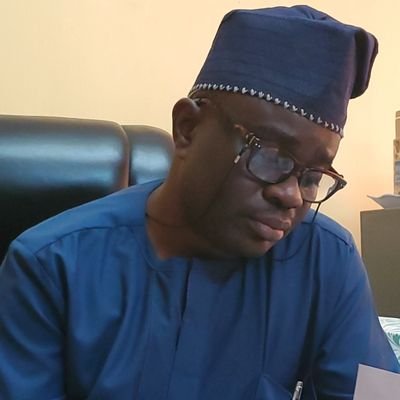

Nigeria’s Local Government Councils In Pakute Aye, By Taiwo Adisa
Is there any knowledge in the world which is so certain that no reasonable man could doubt it? That question would elicit different answers when asked in different arenas. But if anyone had posed the question to any of the 774 local government chairmen in Nigeria during the pendency of the suit on local government autonomy brought to the Nigerian Supreme Court by President Bola Tinubu-led Federal Government, the answer would be as straightforward as you can imagine: ‘We are certain that the president is surely on our side’. But Philosophy teacher, Bethrand Russell, via pressbooks.com, would submit that it is when we realise that there are obstacles to a straightforward answer in dealing with certain questions, then “we shall be well launched in the study of philosophy.” Even though this scholar may not intend to drag us too deeply into the pedagogy of philosophy, he cautions that attempts to answer ultimate questions such as the above should not be careless and dogmatic and that positions should be taken after critically exploring all “the vagueness and confusion that underlie our ordinary ideas.”
With the benefit of hindsight, the 774 local government chairmen, who would have boastfully announced in 2024 that President Tinubu was in their corner, would today stand in awe on who to believe and who truly is on their side. On Thursday, December 18, President Tinubu dropped some lines that let out the subterfuge that got the council chairmen thinking about the “vagueness and confusion” that underlie our ordinary ideas, when he spoke at the National Caucus of the All Progressives Congress (APC) in Abuja.
The President had told his party stakeholders that the Supreme Court ruling of July 10, 2024, must be obeyed, as he made an appeal to the governors to allow the money due to the local governments to get to them. In a rather rhetorical tone, he asked the governors of 36 states in the country to hand over the funds belonging to the local governments to the councils.
Hear him: “You must yield and continue to promote, tolerate and be flexible, get involved in whatever is happening in your various states, up to the local government level.
“Let us equally look at the recent Supreme Court judgment. What can we do with it? And how well we can position our country and our party.
“To me, the local government autonomy, it is and must be effective. There is no autonomy without a funded mandate; we will give them their money directly. That’s the truth. That’s the compliance of the Supreme Court. Take leadership seriously.”
Someone who attempted to read the president’s lips said he spoke in clearly unclear terms, and I added that maybe he had been caught in Russell’s “vagueness and confusion” that underlie ordinary ideas. When the Attorney General of the Federation and Minister of Justice, Lateef Fagbemi, SAN, filed the suit challenging the non-payment of local government funds directly to their coffers at the Supreme Court, no one appeared in doubt that the government of the day wanted to implement local government autonomy as a matter of duty. The court ruled on July 10, 2024, and its ruling was unequivocal: pay local government funds directly to their coffers, and let’s see how any state government would attempt to thwart the order.
Justice Emmanuel Agim, who read the lead judgement held that it is unconstitutional for state governments to retain and use allocation meant for the Local Government Areas (LGAs) on their behalf without transferring the same to them as provided in Section 162(3) of the 1999 Constitution.
Fagbemi had earlier filed the suit, seeking the apex court’s intervention in securing full autonomy to the 744 LGAs in the country. In the suit, filed on 27 grounds, the Federal Government sought an order preventing the governors from arbitrarily dissolving democratically elected councils and the payment of allocations directly to the councils, among others. The Supreme Court held that the practice whereby governors spent council funds on their behalf was a “dubious practice” which had gone on for over two decades, adding that such was an outright violation of Section 162 of the 1999 Constitution (as amended.)
Justice Agim stated: “Demands of justice require a progressive interpretation of the law. It is the position of this court that the federation can pay LGA allocations to the LGAs directly or pay them through the states.
“In this case, since paying them through states has not worked, justice of this case demands that LGA allocations from the federation account should henceforth be paid directly to the LGAs.”
The court also held that it was unconstitutional for states to appoint caretaker committees to run the affairs of local governments, while affirming that the 36 states of the federation were under an obligation to ensure democratic governance at the third tier of government.
The delivery of that ruling sent shock waves across the land as the state governors rushed to announce days for the conduct of council elections. The governors even had to plead that the Federal Government should not immediately implement the ruling to enable the states comply with the provisions of the 2022 Electoral Act in fixing dates for council elections. Some states took other panicky measures as the Federal Government looked determined to pull the local governments out of the armpits of the state governors. The Federal Government set up an implementation committee and then a review committee. Meetings were largely at the instance of the Secretary to the Government of the Federation (SGF). As time went by, it became more of all motion, and no movement, and here we are, one year and five months after the ruling of the apex court, the councils are not just in a financial quandary, they have moved from being in the side pockets of the governors’ Buba top, to the inner pockets of their trousers.
The National Union of Local Government Employees (NULGE) and the Association of Local Governments of Nigeria (ALGON), which were upbeat upon the release of the judgment in July 202,4 have since lost their enthusiasm, with their hope turning to bewilderment. Excuses have finished from the depth of excuses, and at a time when no one was in any way assured of the state of things, the president struck, declaring that councils must get their money.
What the president said on Thursday should leave the LGAs and their workers in no doubt that they are victims trapped in Pakute Aye, Panpe Aye, or if you wish, Takute Aye. Those words refer to the same thing, a mystery trap set by some mythical enemies. In the days before computers and machines took over the scenes, it amounted to a serious prayer when someone said, ‘may the world not follow you.’ These days, internet citizens are looking for how the world will follow them every second of the day. Nothing, however, can turn around the dangers inherent in getting entrapped in a Pakute aye. It is the height of mystery, of someone struggling against the wind, and of a man of valour fighting against unseen forces in the dream and in physical life. He seeks to battle the forces to the ground, but they are not identifiable. Like the unseen flying objects, they sting him at will, leaving him a miserable lot. Such is the scenario the 774 councils are in right now. With hopes raised to the hilt, the level of despair would be like someone falling into a bottomless pit from the top of Mt. Kilimanjaro, which is 19,341ft above sea level.
So, what could have accounted for the failure of the Federal Government to implement the ruling of the Supreme Court on a suit it initiated? Why would the President direct governors to release the funds meant for the councils to them after the federal agencies, especially the Federation Accounts Allocation Committee (FAAC), had paid the money to the coffers of the states? Who is best suited to release the funds to the LGAs, the Federal Government or the states? What really imperiled the direct payment of council allocations? Why was it easy, for instance, to stop the payment of funds to 30 councils in Osun State? And how did FAAC handle the payments during the military era, which ended in 1999? You also want to wonder who the president was addressing when he said the local governments must get their funds, when the yam and the knife are in his custody. The power to pay the funds directly to the LGAs is within the executive powers of the president, especially following the ruling of the apex court, but perhaps caught in the web of “vagueness and confusion that underlie ordinary ideas,” as earlier identified by philosopher Russell, the president and his loyal hands could not move as fast as their legs would want to carry them. That has left the 774 LGAs in the mystery trap-Pakute Aye-from which they may not be set free until 2031, that is, if succour would ever come.
Let me, however, submit that this is not a strange development in the Nigerian polity. President Olusegun Obasanjo was caught in a similar web years ago. His administration had started by backing Abuja politicians against home-based politicians between 1999 and 2001. Many state chapters of the PDP and the state houses of assembly also got factionalised. You saw half of the states’ lawmakers holding court somewhere in the state capital and the other half in other locations, sometimes in Abuja. It happened in Anambra, Enugu, Abia, and other states. The Obasanjo government rallied solidly behind the Abuja politicians, which included ministers, senators, House of Reps members, and ambassadors. They were poised to overthrow the governors of their states. But in 2002, when it dawned on the Obasanjo government that the governors would have a bigger say in the presidential primaries than the Abuja politicians, the turnaround was sharp. Governors regained the structures and a governor like Orji Uzor Kalu of Abia, who had severally tongue-lashed Obasanjo, was returned as PDP leader in his state. Maybe history is repeating itself here, and Tinubu’s men had seen the light very early in the day.