

We’re Not Planning To Wipe Out Christians- Sultan
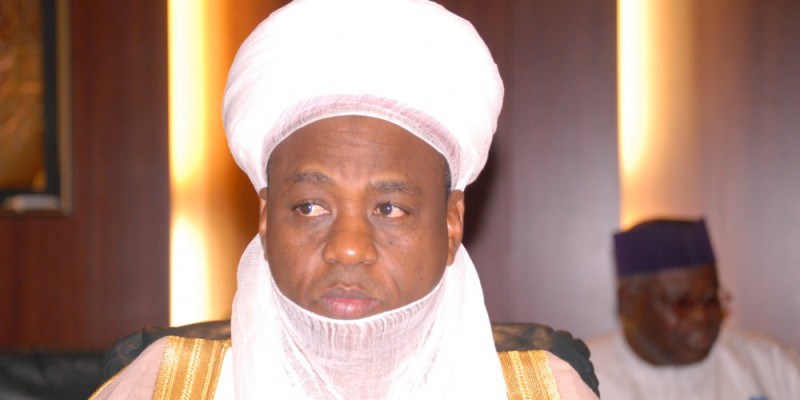
The Sultan of Sokoto, Sa’ad Abubakar III, yesterday pushed back against fears of a religious agenda in Nigeria, declaring that Muslims were not planning to wipe out Christians, as religious and government leaders called for a reset in how the country understands its conflicts.
The remarks came at the first triannual meeting of the Nigeria Inter-Religious Council, NIREC, in Abuja, where the Sultan, who co-chairs the council, spoke alongside President of Christian Association of Nigeria, Daniel Okoh, and the Secretary to the Government of the Federation, George Akume.
Leaders said the way forward laid in dialogue, trust and a stronger push for religious literacy.
The Sultan said: “Today, as I stand here, I want to affirm that Muslims are not in a hurry and are not planning anything like decimating the population of Christians in Nigeria.
“We are not in any position whatsoever to remove Christians from Nigeria. No, it is not possible.’’
He stressed that both faiths must coexist in an environment of stability, respect and understanding of one another, and urged Nigerians to rethink how insecurity was described, even as he warned against attaching religion to criminal acts.
“Let us get the narrative right, it is not about religion. Let us stop bringing religion into it. Let us call them what they are, criminals, not Muslim criminals, not Muslim terrorists, not Muslim bandits. Even if someone claims to be Muslim, what they do goes against Islam,’’ the Sultan said.
Linking the problem to ignorance, he warned against false claims of religious authority, adding that “the fact that you understand Arabic does not make you a Sheikh. Arabic is just a language. So literacy is very important.’’
The Sultan advocated return to dialogue repeatedly, describing it as the only workable path.
He said further: “In NIREC, we believe in dialogue. No matter how bad things are, we believe in dialogue. When talking, you need to understand one another, not just tolerate.
“If you do not believe me, what else can you do? You cannot open my heart to see what is inside. We must trust one another.”
On those who carry out violence in the name of religion, he said: “Somebody can go to the market, blows his or herself up, kill people and shout ‘Allahu Akbar’. Yes, God is great, but you are going to hell. They will suffer for taking innocent lives.’’
Earlier in his remarks, CAN President, Daniel Okoh, framed the conversation around education and understanding, warning against reducing religion to stereotypes.
“Religious literacy is not merely the academic understanding of doctrines or rituals. It is the cultivation of awareness, sensitivity and respect for the beliefs and practices of others,” Archbishop Okoh said.
While noting that many tensions were wrongly labelled, the CAN president said: “Across various parts of our nation, we continue to witness tensions that are sometimes framed along religious lines, even when their root causes may be social, economic, or political.’
The Christian leader stated that NIREC had continued to demonstrate the possibility of cooperation across faith lines.
“Through NIREC, we have demonstrated that despite our religious differences, we share common values of peace, justice, dignity of human life, and the well-being of our nation,” Archbishop Okoh said.
In his remarks, the SGF, George Akume, linked understanding directly to national stability.
“Where there is ignorance, suspicion can take root. Where there is misunderstanding, conflict can arise. But where there is knowledge and empathy, trust can flourish,” George Akume said.
While warning against divisive narratives, he called for stronger institutional support, particularly through education.
He said: “Education plays a crucial role… Schools, universities, and community institutions must prioritise inclusive and accurate teaching about religions and worldviews. We must challenge our assumptions and resist narratives that seek to divide us.’’
On security and education, he added: “We must do everything as a government to ensure that the terrorists who kidnap children who are willing to study must come to an end.”