

YABATECH Students Develop Electric Tricycle, AI Food Delivery System
Students of Yaba College of Technology have developed innovative technology-driven solutions, including a fully converted electric tricycle and an Artificial Intelligence-powered food delivery ecosystem, as part of efforts to promote indigenous innovation, sustainability and entrepreneurship in Nigeria.
The innovations were showcased during the 2026 Global International Day of Innovation and Creativity celebration organised by the institution’s Centre for Entrepreneurship Development with the theme, “Step Out and Innovate.”
The highlight of the exhibition was the electric tricycle conversion project developed by a team of Higher National Diploma students from the Mechanical Engineering Department led by Chukwuma Chisom.
The project involved the conversion of a conventional petrol-powered TVS tricycle into a fully electric commercial transport vehicle aimed at reducing fuel dependency, cutting transportation costs and promoting environmentally friendly mobility solutions.
The student innovators completely removed the internal combustion engine and fuel system of the tricycle and replaced them with a 72-volt 4-kilowatt Brushless Direct Current (BLDC) motor integrated with a compatible smart controller for efficient speed and torque management.
The team explained that the electric drivetrain was mechanically integrated into the existing transmission architecture of the tricycle to ensure smooth operation and improved passenger-load performance suitable for urban transportation.
According to the students, the prototype version of the vehicle currently operates on a 72V 27Ah lithium battery with an estimated range of about 45 kilometres per charge for testing and validation purposes.
They disclosed that the commercial version of the electric tricycle would utilise a 72V 150Ah lithium battery capable of covering approximately 200 kilometres on a single charge, making it suitable for full-day commercial transportation operations.
The innovation also features a smart charging system with automatic cutoff functionality, overheating protection and plug-and-charge capability compatible with standard alternating current power supply.
To ensure durability and operational efficiency, the students carried out extensive fabrication and engineering integration, including custom motor mounting brackets, reinforced battery compartments, chassis support systems, vibration-isolated controller mounting and protected cable routing systems.
The project offers several advantages including zero fuel consumption, low maintenance cost, quiet operation, reduced cost per kilometre and zero tailpipe emissions, positioning it as a sustainable alternative for Nigeria’s transport sector.
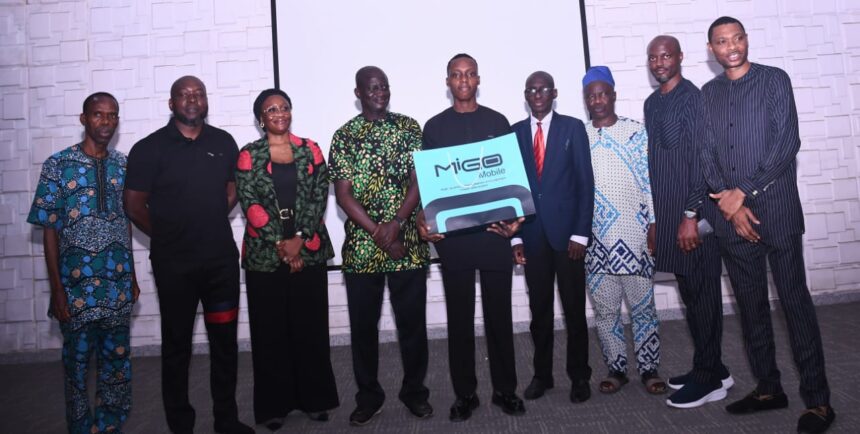
The innovation emerged overall best at the competition, earning the team a Migo laptop valued at about ₦890,000 and cash prize of N150, 000 for all the innovators sponsored by Migo Phones Limited and Pay Vogue Pay ICT firm.
Another innovation that attracted attention at the exhibition was an Artificial Intelligence-driven food delivery ecosystem developed by student innovator Uba Mathew.
The concept seeks to transform traditional food delivery services into an intelligent digital ecosystem powered by predictive analytics, automation and data-driven decision-making.
Presenting the project, Uba noted that existing food delivery platforms often lack personalised user experience, structured customer feedback systems and intelligent logistics coordination.
According to him, the proposed solution introduces AI-powered personalisation capable of recommending meals, vendors and promotional deals based on users’ behavioural patterns and preferences.
The platform also integrates product review systems aimed at improving transparency and helping customers make informed purchasing decisions.
He further explained that the innovation would provide vendors with actionable business analytics while introducing smart logistics systems capable of predicting delivery demands and improving operational efficiency.
The project equally proposes a balanced rider performance evaluation system designed to ensure fairness, accountability and improved service quality across the delivery chain.
Speaking at the event, the Rector of the College, Dr. Engr. Ibraheem Abdul, represented by the Director, Centre for Applied Research and Technology Innovation, Dr. Engr. S. Oloketuyi, described innovation and creativity as essential drivers of economic growth and national development.
He urged Nigerian youths to embrace technology, creativity and entrepreneurship as pathways to solving societal challenges and attaining global relevance.
“Creativity is now the currency of relevance, while innovation remains the bridge between where we are and where we must go,” the Rector stated.
He stressed that challenges confronting Nigeria in transportation, healthcare, agriculture, infrastructure and education should be viewed as opportunities for local innovation and technological advancement.
Earlier in his remarks, the Director, Centre for Entrepreneurship Development, Dr. Raheem, encouraged students to remain adaptable and innovative in a rapidly changing world shaped by artificial intelligence, robotics and emerging technologies.
The event attracted academics, innovators, industry experts, technology enthusiasts and students, and featured panel discussions, innovation exhibitions and idea-pitching sessions aimed at promoting entrepreneurship and practical problem-solving.